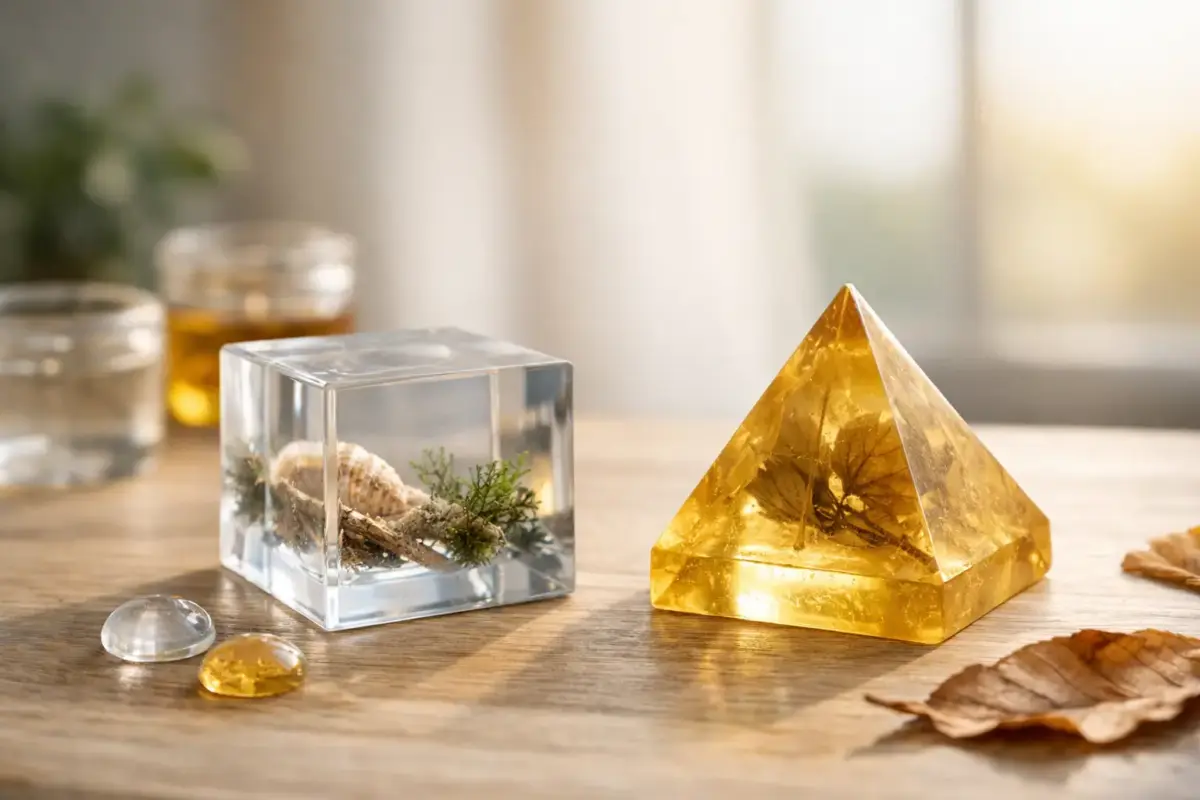
You finish a crystal-clear resin piece, leave it on display for a while, then notice a warm amber tint where there used to be glass-like clarity. So, does resin yellow over time? In most cases, yes. Clear resin is not completely immune to ageing, and exposure to ultraviolet light, heat and oxygen can gradually alter its appearance.
That can be disappointing, especially when making jewellery, coasters, trays, keepsakes or decorative castings where clarity is central to the design. The good news is that resin yellowing can often be slowed considerably by choosing the right product, following its instructions carefully and protecting the finished piece from harsh conditions.
Why does resin yellow over time?
Resin turns yellow because its chemical structure changes as it ages. When cured resin is exposed to ultraviolet light, heat and oxygen, parts of that structure begin to break down. The material then absorbs and reflects light differently, creating the yellow, honey-coloured or amber appearance associated with older resin.
This does not necessarily mean that the maker has done anything wrong. Even correctly measured, thoroughly mixed and properly cured resin can change colour eventually. Some formulations simply resist discolouration better than others, particularly those made with UV stabilisers or other additives intended to preserve clarity.
There is also a difference between gradual warming and rapid discolouration. A slight amber tint developing over a long period can be part of normal ageing. Resin that becomes noticeably yellow within a short time may have experienced strong sunlight, excessive heat, unsuitable storage or curing conditions that were not right for the product.
What causes yellow resin?
Exposure to ultraviolet light
Sunlight is one of the main causes of resin yellowing. Ultraviolet radiation gradually breaks down cured resin, even when the surface feels completely hard and looks glossy. A clear casting kept indoors and away from windows will normally retain its appearance longer than jewellery worn outdoors or decorations displayed in direct sunlight.
This is particularly noticeable with clear pieces, pale colours and resin containing white backgrounds or delicate inclusions. Darker pigments and metallic effects may disguise some yellowing, but they do not necessarily prevent the underlying resin from ageing.
Heat
Heat speeds up chemical ageing. Resin pieces stored near radiators, inside hot cars, under strong lamps or in warm conservatories can discolour more quickly. The combination of sunlight and heat is especially harsh, which is why a sunny windowsill is rarely a good long-term display position for a clear casting.
Heat can also build up during curing. Pouring deeper than the resin manufacturer recommends or mixing a large volume in one container may produce excessive exothermic heat, potentially affecting clarity from the beginning.
Oxidation
Cured resin remains exposed to the surrounding air. Over time, contact with oxygen can contribute to oxidation and gradual colour change. This tends to be most visible in transparent or lightly coloured pieces, where even a small shift in tone is easy to see.
Resin formulation and storage
Different resins are designed for different purposes. Some are intended for deep casting, while others are made for coating, mould work or fast-curing jewellery projects. Their resistance to yellowing can vary, so it is important to select a product suited to both the project and its likely display conditions.
Uncured resin can also become discoloured if it is old or has been stored badly. Bottles should generally be kept sealed, upright and away from direct sunlight and extreme temperature changes, following the product instructions.
Does UV resin yellow over time?
Yes, UV resin can yellow over time. This sometimes causes confusion because UV resin is cured using ultraviolet light, but that does not make the finished piece immune to future UV damage.
Some formulations offer better resistance than others, but regular exposure to sunlight can still lead to gradual ambering. The effect may be more noticeable in clear jewellery, transparent cabochons and pale decorative pieces.
When working with UV Resin, use the recommended curing process and avoid unnecessarily prolonged exposure once the piece has cured. Finished items should be stored or displayed away from strong sunlight whenever practical.
Does epoxy resin yellow over time?
Epoxy resin can also yellow over time, particularly when used for completely transparent castings or coatings. The speed of the change depends on the formulation, exposure to light and heat, the thickness of the pour and how accurately the resin was prepared.
For projects where transparency matters, choose a suitable Clear Resin and check that its intended use matches your mould, coating or casting depth. The correct resin will not remain unchanged forever, but it should give the project a better chance of retaining its clarity.
You can also browse the wider Epoxy Resin range when comparing options for casting, coating and decorative projects.
Can mixing mistakes make resin turn yellow?
Mixing mistakes can contribute indirectly. Incorrect measuring, incomplete mixing or excessive heat during curing may produce a less stable result. A piece can initially appear acceptable but age poorly if the chemical reaction was not properly balanced.
Common preparation problems include:
- Using an incorrect resin-to-hardener ratio.
- Failing to scrape the sides and base of the mixing cup.
- Mixing for less time than the manufacturer recommends.
- Pouring deeper than the product’s stated limit.
- Allowing excessive heat to build up in a large batch.
- Using unsuitable dyes, pigments or inclusions.
Pigments can also change how yellowing appears. A transparent white, pale pink or clear flower casting may show warmth very quickly, while darker colours can conceal it. This is partly a design issue rather than evidence that one piece has aged more than another.
Does purified recycled resin yellow over time?
Purified recycled resin can yellow over time, but the term alone does not tell you how quickly this will happen. Its performance depends on the specific material, how it was processed, what stabilisers were added and the intended application.
Recycled content does not automatically mean that a resin will discolour rapidly, just as a new resin is not automatically guaranteed to remain perfectly clear. For craft projects, rely on the manufacturer’s information about clarity, UV resistance, curing requirements and suitable uses rather than assuming performance from the recycled label alone.
Why do some resin projects yellow faster?
A thin pendant, a deep paperweight and a coated tabletop will not age in exactly the same way. Several factors determine how quickly resin yellowing becomes visible:
- Clarity: Transparent resin shows colour changes more readily than heavily pigmented resin.
- Thickness: Thick pours may generate more heat during curing.
- Location: Pieces displayed in direct sunlight tend to age faster.
- Use: Jewellery worn outdoors receives more UV exposure than an ornament kept in a cupboard.
- Background colour: White and pale backgrounds make amber tones easier to notice.
- Temperature: Regular exposure to warmth can accelerate ageing.
Can you stop resin yellowing completely?
It is difficult to guarantee that any clear resin will remain perfectly colourless forever. The more realistic aim is to slow the process and make sensible choices about materials, curing and display.
To help resin remain clear for longer:
- Choose a resin intended for the specific project.
- Use products formulated for good clarity and resistance to UV exposure.
- Measure and mix according to the manufacturer’s instructions.
- Stay within the recommended pour depth.
- Cure the piece under the correct temperature and time conditions.
- Store unused resin away from direct sunlight and temperature extremes.
- Keep finished pieces away from prolonged sunlight and excessive heat.
These steps cannot make resin immune to ageing, but together they can make a noticeable difference to how long a project retains its original appearance.
Designing resin projects with yellowing in mind
Clear resin can be beautiful, but complete transparency is not the only option. A light tint, pearlescent pigment, metallic detail or coloured background can make gradual ageing much less noticeable while still allowing light and depth to show through the piece.
This can be particularly helpful for items that will receive regular exposure to daylight. Makers selling resin pieces may also wish to include simple care instructions advising customers to avoid prolonged direct sunlight, hot cars and storage close to strong heat sources.
Does yellowing mean the resin is ruined?
Not necessarily. Slight yellowing is often mainly a visual change, and the piece may remain hard, stable and usable. Whether it feels ruined depends on the design. A warm tint may barely show in a gold-toned coaster but could be very noticeable in a clear memorial casting.
If the resin is also soft, sticky, unevenly cured or distorted, the problem may be more than normal ageing. In that case, review the original measuring, mixing, curing temperature and pour depth before attempting the project again.
Mild discolouration can sometimes be disguised with an opaque backing, metallic embellishment or additional decorative detail. Where perfect clarity is essential, remaking the piece with a better-suited resin and improved curing conditions may be the most reliable solution.
Choosing resin with realistic expectations
All resin products age differently, and no single formula is ideal for every project. The best approach is to match the resin to its intended use, follow the instructions closely and consider where the completed item will be worn, used or displayed.
So, does resin get yellow over time? Usually, yes, particularly when clear resin is exposed to sunlight, heat and oxygen. Careful material selection and good working practices will not stop natural ageing forever, but they can help your finished work remain clearer and more attractive for considerably longer.