If you have ever paused mid-project wondering whether to reach for uv resin or epoxy resin, you are not overthinking it. The resin you choose changes how fast you can work, what moulds you can use, how deep you can pour, and how polished the final piece looks. For jewellery makers, hobby crafters and small creative businesses, that choice can save a lot of trial and error.
Both materials have a place on the craft table. Neither is simply better across the board. The right option depends on what you are making, how you like to work, and whether speed or flexibility matters more for that specific project.
UV resin or epoxy resin: the main difference
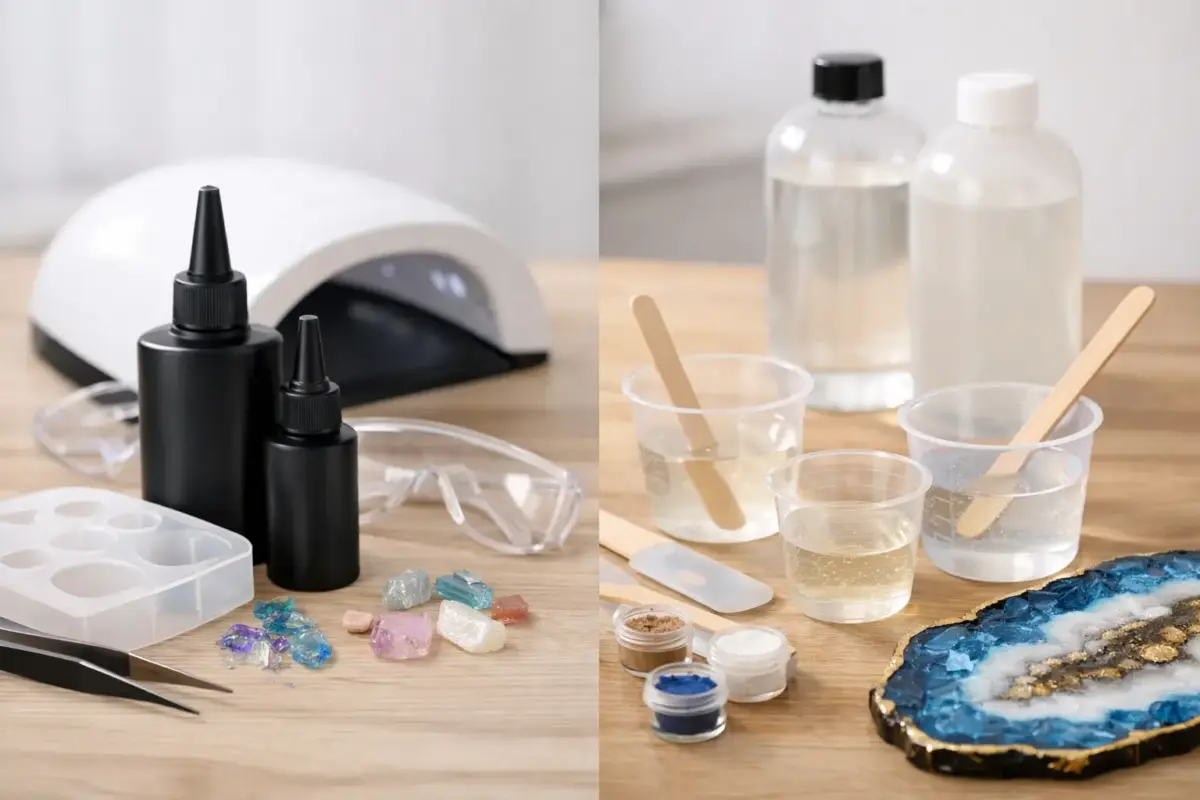
The biggest difference is how they cure. UV resin hardens when exposed to a UV lamp or direct sunlight, while epoxy resin cures through a chemical reaction after you mix resin and hardener together.
That single difference affects almost everything else. UV resin is quick and convenient for small projects because there is no mixing stage. Epoxy resin takes more preparation, but it gives you more working time and is far better for larger pours, deeper moulds and projects where you want to blend pigments, glitter or inclusions carefully.
If you like fast results and are working in thin layers, UV resin often feels easier. If you want versatility and room to experiment, epoxy resin usually gives you more options.
When UV resin makes the most sense
UV resin is popular for makers who want speed and simplicity. You can dispense it straight from the bottle, position your embellishments, then cure it under a lamp in minutes. That makes it especially useful for small jewellery pieces, doming, coating charms, sealing dried flowers near the surface, and adding a glossy top layer to finished work.
It is also helpful if mixing ratios make you nervous. Because UV resin comes ready to use, there is less setup and less chance of wasting material through incorrect measuring. For beginners, that can make the whole process feel much more approachable.
There are limits, though. UV resin works best in thin applications because the light needs to penetrate the resin properly. If the piece is too deep, heavily pigmented, or packed with opaque inclusions, the centre may stay tacky or cure unevenly. That can be frustrating if you are trying to fill thicker moulds in one go.
You will also need a UV lamp for reliable results. Sunlight can work in some cases, but it is not consistent enough if you want predictable curing times.
Best uses for UV resin
UV resin is usually the better fit for open-back bezels, domed surfaces, small cabochons, top coats, attaching tiny decorative elements, and quick repairs. It suits makers who want to finish pieces fast, photograph them quickly, or create in short sessions without setting up a full mixing station.
For batch work, it can be brilliant for finishing touches. For full mould filling, it depends very much on the size and depth of the piece.
When epoxy resin is the better choice
Epoxy resin is the go-to option for a much wider range of resin crafts. Once mixed correctly, it can be poured into moulds, used for casting, layered for artwork, and coloured in many different ways with pigments, mica powders and glitters.
Its strength is flexibility. If you are making coasters, trays, bookmarks, keyrings, deeper jewellery moulds or decorative castings, epoxy resin usually gives a more reliable cure through the full body of the piece. It is also easier to work with when you want marbling, suspended glitter, petri effects or carefully placed inclusions.
The trade-off is that epoxy resin asks more of you at the start. You need to measure accurately, mix thoroughly, and pay attention to temperature, pot life and cure time. If you rush the mixing or get the ratio wrong, the resin may remain soft or sticky.
That sounds technical, but in practice it becomes routine quite quickly. Many makers find that once they understand the basics, epoxy opens up far more creative possibilities.
Best uses for epoxy resin
Epoxy resin is generally best for silicone mould projects, deeper pours, larger castings, layered designs, artwork, home décor pieces and any project where you need a bit of working time. If you like experimenting with colour and detail, epoxy tends to be the more forgiving choice because you are not racing the UV lamp.
It is also a strong option for beginners who want to make a wide variety of projects rather than only small surface-coated pieces.
Which resin is easier for beginners?
This depends on what kind of beginner you are.
If you want the quickest route to a finished piece, UV resin can feel easier. There is no mixing, less mess, and much faster curing. It is a good confidence-builder for small projects and simple jewellery.
If you want to learn one resin system that can cover more types of crafting, epoxy resin often makes more sense. Yes, there is more to learn at the beginning, but it supports a broader range of moulds and techniques. A beginner making keyrings, coasters, trays and decorative moulded pieces will probably outgrow UV resin quite quickly.
So the easier option is not always the more useful one long term. It depends whether you want quick wins or more versatility.
Finish, clarity and appearance
Both UV and epoxy resin can produce a clear, glossy finish when used properly. For surface shine and doming, UV resin gives a lovely glass-like look and is especially handy when you want a neat top coat.
Epoxy resin can also cure beautifully clear, especially in moulds and cast pieces, but the finish depends heavily on accurate mixing, correct curing conditions and bubble control. With the right setup, epoxy offers that polished professional look many makers want for selling handmade items.
If you are working with pigments, keep in mind that UV resin can struggle when colours are very dense or opaque. Epoxy resin usually handles heavier colouring better because it cures chemically rather than relying on light penetration.
Time, workflow and project planning
This is where the choice often becomes obvious.
UV resin suits quick making sessions. If you craft in short bursts, need fast turnarounds, or enjoy building pieces in rapid layers, it fits naturally into that workflow. You can make, cure and move on without waiting overnight.
Epoxy resin is slower, but that slower pace can be helpful. You have time to remove bubbles, arrange embellishments and refine the design before the resin sets. For makers who enjoy the process as much as the result, that extra working time is often part of the appeal.
If you sell your work, think about production style. UV resin is excellent for quick finishing and small components. Epoxy resin is usually better for repeatable castings and broader product ranges.
Cost and waste
UV resin can seem efficient because you use it straight from the bottle and cure only what you need. For small-scale jewellery and detail work, that is a real advantage.
But for larger projects, it can become less practical and more expensive than epoxy. Filling deep or wide moulds with UV resin is not usually the best use of the material, especially if curing becomes uneven and you need multiple thin layers.
Epoxy resin often offers better value for bigger makes and batch casting, although you do need to mix carefully to avoid waste. Using the right mixing cups, tools and mould sizes helps a lot here.
Safety and setup
Whichever resin you choose, safe handling matters. Work in a well-ventilated area, protect your surface, and use suitable gloves and other protective equipment where needed. Clean tools, compatible moulds and a tidy workspace also make the whole experience easier.
Epoxy resin usually involves more setup because of measuring and mixing, while UV resin adds the need for a lamp and attention to curing exposure. Neither should feel intimidating, but both benefit from having the right accessories ready before you start.
So, should you choose UV resin or epoxy resin?
Choose UV resin if you mainly make small jewellery pieces, need a glossy coating, want fast curing, or prefer a low-fuss process with no mixing. It is brilliant for doming, surface finishing and quick creative sessions.
Choose epoxy resin if you want to work with silicone moulds, make deeper castings, experiment with pigments and inclusions, or create a wider range of projects. It takes a little more preparation, but it rewards you with more flexibility.
Many makers end up using both. That is often the most practical answer. Epoxy resin handles the main casting work, while UV resin steps in for top coats, small details and speedy fixes. If you are building your craft setup gradually, that combination can cover a lot of ground without complicating your process.
If you are still deciding, start with the projects you actually want to make next week, not the ones you might try six months from now. The best resin is the one that helps you create something beautiful with confidence.