
How to Use Mica Powder for Resin
A resin piece can look flat one minute and completely luminous the next, simply by changing the pigment. That is why mica powder for resin remains one of the most popular colouring options for makers who want vibrant colour, metallic effects and a beautiful pearlescent finish without complicated techniques.
Whether you are creating jewellery, coasters, keyrings, home décor or artwork, learning how to use mica powder in resin will help you produce cleaner, more consistent results. This guide explains how mica works, how much to use, whether it is suitable for UV resin, and how to avoid the mistakes that commonly spoil a finished pour.
If you are looking for compatible materials, browse our ranges of Epoxy Resin, UV Resin and products from Resin Studio.
What is mica powder for resin?
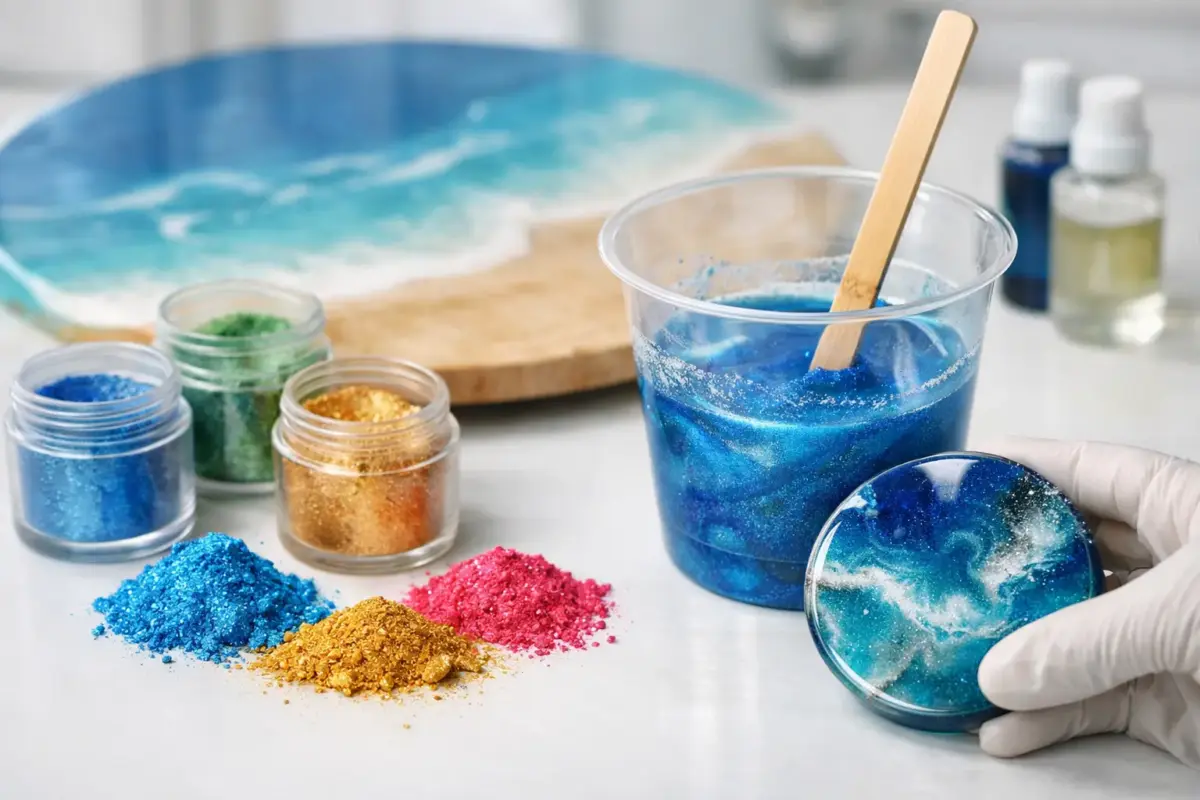
Mica powder is a finely milled mineral pigment that adds colour together with a metallic or pearlescent shimmer. Unlike transparent resin dyes, mica particles remain suspended throughout the resin, reflecting light and creating depth that changes depending on the viewing angle.
This makes mica powder ideal for decorative resin work. It can be used to create soft pearl finishes, rich metallic colours, marbled effects, layered pours and shimmering opaque designs. The amount you add determines whether the finished appearance is subtle or bold.
How to use mica powder in resin
If you are wondering how to use mica powder, the process is straightforward.
- Mix your resin and hardener completely according to the manufacturer’s instructions.
- Add a small amount of mica powder to the mixed resin.
- Stir thoroughly until no dry pigment remains.
- Add more mica gradually if a stronger colour is required.
- Pour into your mould or project as normal.
Always begin with less pigment than you think you need. It is much easier to deepen the colour than to dilute resin that has become overloaded with powder.
Many experienced makers first blend the mica into a small amount of resin before mixing it through the rest of the batch. This helps eliminate clumps and creates a smoother, more even finish.
How much mica powder should you add?
One of the most common questions is how much mica powder to add to resin. There is no universal measurement because every resin system, pigment and project size is different.
A practical approach is to add a small amount, assess the colour, then increase it gradually if required. The ideal mixture should appear evenly coloured while still flowing freely.
Adding excessive pigment can make resin thicker, more difficult to pour and, in some situations, affect curing. Keeping notes of successful colour mixes makes it much easier to reproduce matching pieces in future projects.
Can you use mica powder in UV resin?
Yes, you can use mica powder in UV resin, and many makers do so successfully. However, UV resin behaves differently from epoxy resin because it cures when exposed to ultraviolet light.
Too much mica powder can reduce the amount of light reaching the centre of the resin, especially in thicker pours. This may leave the piece tacky or prevent it curing fully.
For the best results with UV resin:
- Use mica powder sparingly.
- Work in thinner layers where possible.
- Allow sufficient curing time.
- Test heavily pigmented colours before starting an important project.
If you regularly create jewellery or small decorative items, our range of UV Resin products offers options designed for detailed projects.
Why use mica powder instead of other resin pigments?
Mica powder offers a finish that liquid dyes and pigment pastes cannot always achieve. The reflective particles create movement and depth, making finished pieces appear more vibrant when viewed under different lighting.
It is particularly well suited to:
- Jewellery and pendants.
- Coasters and trays.
- Bookmarks.
- Keyrings.
- Geode artwork.
- Decorative home accessories.
If complete transparency is your goal, a liquid dye may be the better choice. For shimmering metallic finishes, however, mica powder remains one of the easiest and most versatile options.
Common mistakes when using mica powder in resin
Most problems are easy to avoid with careful preparation.
- Adding too much pigment too quickly.
- Not mixing thoroughly enough.
- Expecting transparent results from a pearlescent pigment.
- Using excessive mica in UV resin.
- Failing to test colours before producing larger batches.
If your finished piece looks streaky, continue mixing for longer next time. If the cured surface appears dull rather than reflective, polishing the resin often restores much of the shine.
Tips for professional-looking resin projects
Small improvements in technique often make a significant difference.
- Measure resin accurately.
- Mix slowly to reduce bubbles.
- Keep pigments sealed when not in use.
- Wear suitable protective equipment.
- Prepare enough coloured resin for matching sets.
- Test new colour combinations on smaller pieces first.
Mica powder rewards experimentation, but consistency comes from keeping simple notes of your resin volume, pigment quantity and curing conditions.
Choosing the right mica colours
If you are starting your collection, versatile shades such as gold, silver, pearl white, black, rose gold and rich jewel colours will cover most projects. Metallic colours are excellent for luxury-style home décor, while softer pearl shades work beautifully in wedding keepsakes and jewellery.
You do not need every colour available. A carefully chosen palette that suits your projects is often more useful than a large collection that rarely gets used.
Final thoughts
Learning how to use mica powder for resin is one of the quickest ways to improve the appearance of your projects. By starting with small amounts, mixing thoroughly and choosing colours that suit your design, you can achieve professional-looking results whether you are working with epoxy resin or UV resin.
As your confidence grows, experiment with layered pours, metallic combinations and marbled effects. Mica powder offers almost endless creative possibilities, making it one of the most versatile pigments available for resin artists and hobby makers alike.