Buying your first epoxy resin starter kit should feel exciting, not like you are piecing together a chemistry set from five different shops. Most beginners do not struggle because resin is too complicated. They struggle because they are missing one key item, using tools that do not quite match, or starting with a kit that looks generous but leaves out the practical bits that actually make the project work.
A good starter kit removes that friction. It gives you the essentials to mix, pour and cure with confidence, while keeping the process simple enough to enjoy. If you are new to resin art, jewellery, coasters or small decorative pieces, the right kit can save money, reduce waste and help you get a clean first result instead of a sticky lesson.
What makes a good epoxy resin starter kit
The best kits are not always the biggest. They are the ones built around compatibility. Your resin, hardener, cups, stirrers, colourants and moulds need to work together in a way that makes sense for a beginner. That sounds obvious, but it is where many first purchases go wrong.
A useful epoxy resin starter kit should include a resin system that is clearly labelled, easy to measure and suitable for the sort of projects a beginner is likely to try first. Small mould work, coasters, trinket trays and simple castings all need slightly different things, but beginners usually benefit most from a general-purpose epoxy resin with straightforward mixing instructions and a finish that cures clear.
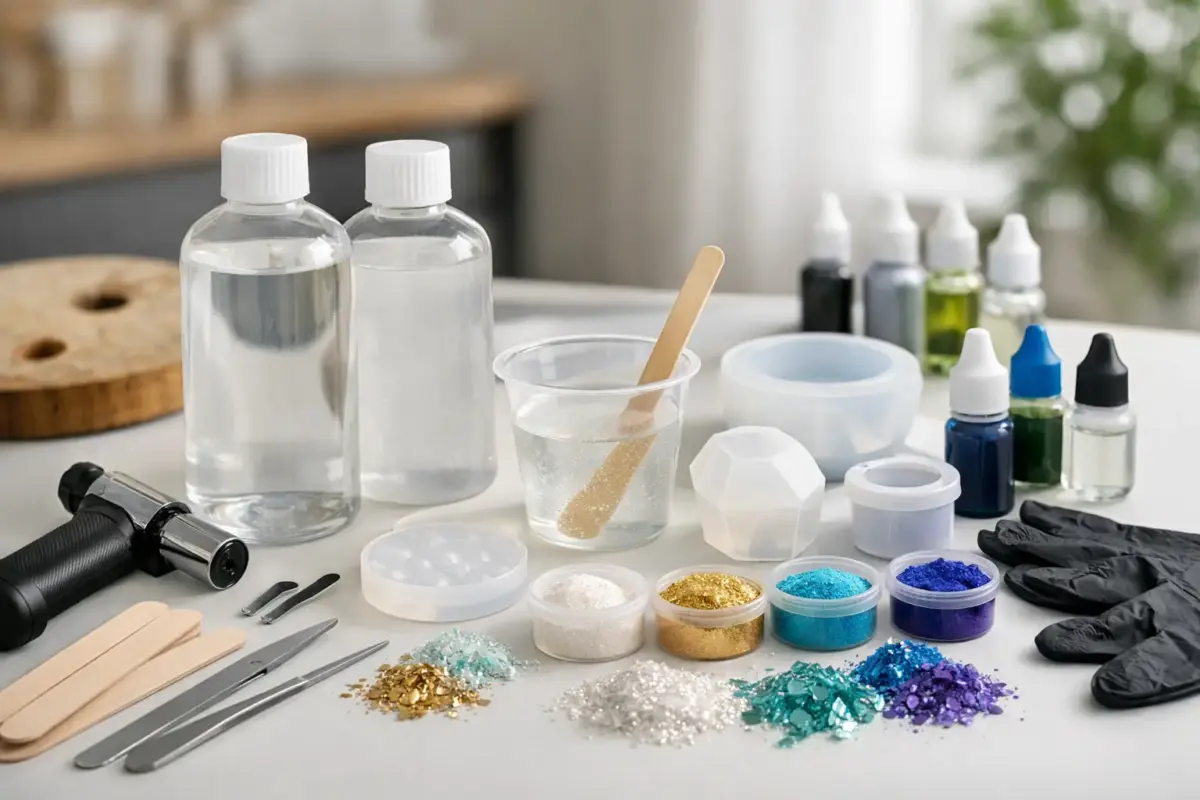
It should also include the unglamorous items that stop mistakes before they happen. Mixing cups with visible markings matter. So do stirrers, gloves and a work surface protector. These are not exciting extras, but they are often the difference between a relaxed first pour and a rushed, messy one.
What should be inside an epoxy resin starter kit?
At minimum, a beginner kit should cover the full basic workflow from measuring to curing. That usually means resin and hardener, mixing tools, protective gloves and at least one project format such as moulds or accessories for surface pours. If a kit includes pigments or mica powders, that is a bonus, but only if the core essentials are still there.
Some kits focus on creativity first, with colour packs, glitter and decorative inclusions. These can be brilliant for inspiration, but they are only helpful if the resin itself is beginner-friendly. A kit with ten colours and confusing instructions is less useful than a simpler one with fewer extras and better project success.
You should also look at quantity. Very small kits can be a good low-risk way to start, especially if you want to test the process before investing more. The trade-off is that you may only get one or two projects from them. Slightly larger kits often offer better value because they leave room to learn from a first attempt and try again without immediately reordering.
Safety matters more than beginners expect
Resin crafting is creative, but it is still a materials-based process. A starter kit should help you work safely from the start rather than treating safety as something you upgrade to later.
Gloves are the obvious inclusion, but they should not be the only one. Good ventilation, a protected work surface and clear handling guidance all matter. If you are buying separately, it is easy to focus on resin and moulds and forget practical safety gear. That is one reason a well-built kit is so useful. It prompts better habits from day one.
This does not mean resin needs to feel intimidating. It just means beginners do better when the setup is clear. If you know what to wear, where to pour and how long to leave a piece to cure, the whole process feels much more manageable.
The biggest mistakes people make with starter kits
The most common problem is buying based on extras rather than foundations. Pigments, dried flowers and foil flakes look fun on the product page, but they will not rescue a poor mix or a resin system that does not suit your project.
Another mistake is choosing a kit that is too advanced for the intended use. Deep pour resin, for example, is not the same as a quick, small-volume craft resin. If you want to make jewellery or coasters, you need a kit matched to those kinds of pours. Starting with the wrong resin can lead to slow curing, bubbles or disappointing finishes.
There is also the issue of false economy. A bargain kit can end up costing more if it leaves out cups, safety items or enough resin to complete a proper project. Beginners often blame themselves when a project fails, when the real issue is that the kit was incomplete from the start.
Which projects suit a beginner best?
If you are choosing your first epoxy resin starter kit, think about the projects you genuinely want to make in the next couple of weeks, not the ambitious idea you might attempt six months from now. Small, flat or shallow moulded projects are usually the easiest place to begin.
Coasters are popular because they teach measuring, mixing and finishing without being too fiddly. Jewellery can also be a strong starting point, especially if the kit includes smaller moulds and decorative colourants. Trinket dishes and simple home décor pieces are good too, as they give you a bit more room to experiment with swirls, pigment placement and embedded details.
Larger castings and furniture-style pours are better left until you understand working time, curing behaviour and heat build-up. That is not to discourage ambition. It is simply easier to enjoy resin when your first project matches your current skill level.
Starter kit or build your own?
It depends on how confident you feel and how specific your project is. If you already know you want a particular mould shape, a certain pigment style or a specialist finish, building your own set-up can make sense. It gives you more control and avoids paying for pieces you may not use.
For most beginners, though, a starter kit is the better route. It removes guesswork and cuts down the risk of incompatible products. It is also faster. Instead of researching every cup, glove and powder separately, you can focus on learning the process and seeing what kind of resin work you enjoy most.
That convenience matters more than many people realise. Resin projects involve timing, measuring and preparation. When your supplies arrive in one coherent set, you are more likely to get started quickly and have a smoother first experience. That is a big part of why specialist retailers such as Resin Studio are useful for beginners – the product range is built around making the whole workflow easier to understand.
How to choose the right epoxy resin starter kit for you
Start with project type. Are you making jewellery, coasters, trays or small decorative pieces? Then look at resin volume, included tools and whether the kit supports safe working. Finally, check how much guidance comes with it. Beginners do well with clear, direct instructions and realistic expectations about cure time and finish.
If you are buying in the UK, delivery speed and stock consistency are worth considering too. Resin is often bought with a project in mind, whether that is a weekend craft session, gift making or trial stock for a small business. Reliable fulfilment makes a difference, especially when you know you will need refills of pigments, gloves or accessories once you get going.
Reviews can also be useful, but read them for practical clues rather than just star ratings. Look for mentions of easy mixing, clear instructions, good packaging and whether the kit felt complete. Those details tell you more than broad praise.
What happens after your first kit?
A starter kit is not the end point. It is the easiest way to learn what you enjoy using and what you want more of. Some people quickly move towards mould work and bold pigments. Others prefer clear castings, pressed flowers or clean, minimal finishes. Your first kit gives you a low-friction way to discover that.
Once you know your style, it becomes easier to buy refills and add-ons with confidence. You can expand into different moulds, stronger colour ranges, finishing tools or bench accessories without feeling like you are starting from scratch each time.
That is the real value of a good epoxy resin starter kit. It does not just supply materials. It helps you begin well, build confidence early and create something you are actually pleased to keep, gift or sell. Start with the kit that makes the process clear, and the creativity tends to follow.