That sharp chemical smell when you open a fresh bottle of resin is your cue to take safety seriously. If you are wondering about the best respirator for resin, the short answer is this: for most epoxy and UV resin crafting, you want a properly fitted half-face respirator with filters rated for organic vapours, not a basic paper mask.
The longer answer matters, because not every resin setup is the same. A hobbyist pouring a few coasters by an open window has different needs from a maker casting batches of jewellery every evening in a small workshop. Getting the right mask is less about buying the most expensive option and more about choosing the right type, fit and filter for the way you actually work.
What makes resin fumes a concern?
When people talk about resin safety, they often jump straight to gloves and forget the air around them. But liquid resin and hardener can release vapours while you measure, mix and pour. Sanding cured resin creates dust too, which is a separate issue from fumes and needs slightly different protection.
For most crafters, the main concern during mixing and pouring is exposure to organic vapours. These are the airborne chemicals that can cause headaches, irritation or discomfort, especially in a small room with poor ventilation. Sensitivity can also build over time. That means even if you have used resin before without any obvious problem, it is still worth protecting yourself properly.
The best respirator for resin is usually a half-face mask
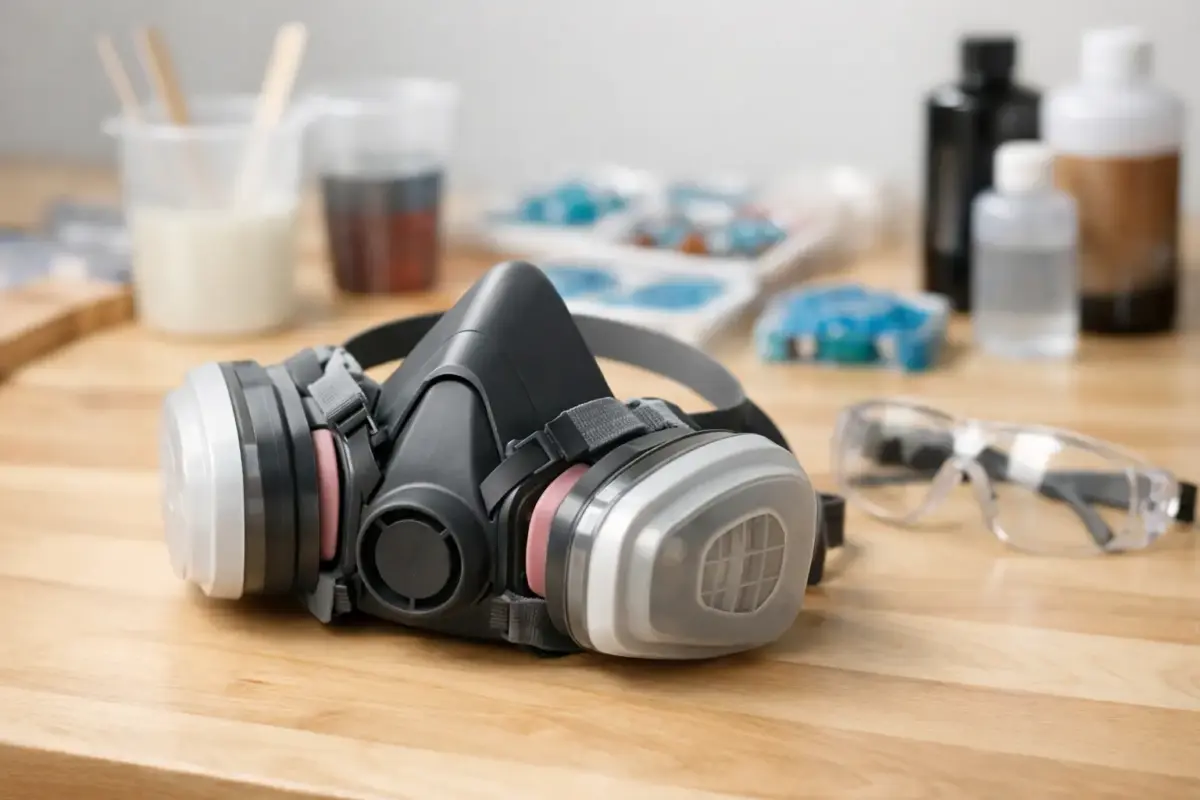
For most resin art, jewellery making and casting projects, the best respirator for resin is a reusable half-face respirator paired with organic vapour cartridges. This style covers your nose and mouth, creates a seal against your face, and gives much better protection than disposable masks designed only for dust.
A full-face respirator can offer extra eye protection and a wider seal area, but it is often more than most home crafters need. It also tends to be bulkier and more expensive. If you are working on regular resin projects at a craft table or in a home studio, a half-face respirator is usually the sweet spot between comfort, cost and proper protection.
The key point is that a respirator works because of both the mask body and the filter attached to it. Buying a good facepiece with the wrong cartridges will not solve the problem.
What filters do you need for resin?
This is where many beginners get tripped up. A respirator for resin should use filters suitable for organic vapours. In the UK, you may see filters marked with standards or categories that indicate vapour protection. Product naming varies between brands, so always check that the cartridge is intended for organic vapours rather than only dust or particulates.
If you also sand cured resin, a combination filter can make sense. That gives you protection against organic vapours during pouring and particulates during sanding. If your sanding is occasional and you wet-sand to keep dust down, you may choose to manage that step separately. If you do a lot of dry sanding, make sure your setup covers dust properly too.
This is one of those areas where it depends on your workflow. Someone making a single tray at the weekend may only need a straightforward vapour setup, while a seller producing dozens of pieces a week may prefer a combination filter so one respirator covers more of the job.
Why a dust mask is not enough
A disposable dust mask can be useful for sanding dust, depending on its rating, but it is not the same thing as a respirator designed for fumes. If it does not use organic vapour cartridges and does not seal properly to your face, it will not give suitable protection during mixing and pouring.
This is one of the most common mistakes resin crafters make. Paper-style masks are familiar, cheap and easy to pick up, so they feel like a sensible first step. But for liquid resin fumes, they are simply the wrong tool.
If you only remember one thing from this guide, make it this: smelling resin through your mask is a sign to stop and check your protection, fit and ventilation.
How to choose the best respirator for resin work
Start with fit, because even the best filters cannot help much if air leaks in around the edges. A respirator should sit snugly against your face without pinching. It needs adjustable straps and enough structure to stay sealed while you talk, look down and move around your workspace.
Comfort matters more than people expect. Resin sessions can run longer than planned, especially when you are mixing colours, adding inclusions or pouring several moulds at once. If your mask feels awkward after ten minutes, you are less likely to wear it consistently. Soft face seals, low-profile cartridges and a manageable weight all help.
It is also worth thinking about glasses. Some half-face respirators work well with spectacles, while bulkier designs can interfere with the fit or make things uncomfortable around the bridge of the nose. If you wear glasses while crafting, that is not a small detail.
Finally, look at replacement filters before you buy. A respirator is not a one-off purchase. You will need to replace cartridges according to the manufacturer guidance, usage level and storage conditions. Choosing a model with easy-to-find replacements makes life much simpler.
Ventilation still matters
A respirator is part of your safety setup, not the whole setup. Good ventilation makes a real difference when working with resin. Open windows, steady airflow and avoiding tiny enclosed rooms all help reduce vapour build-up.
That said, ventilation is not a substitute for a proper respirator. A cracked window may make the room feel fresher, but it does not guarantee that you are not breathing in vapours while leaning directly over a mixing cup. The best approach is both: good airflow and the right respiratory protection.
If you are working indoors during cold or wet weather, it is easy to compromise on ventilation. That is often when having a reliable respirator matters most.
A few fit and use tips that make a big difference
Once you have the right mask and cartridges, use it properly every time you handle resin. Put it on before opening bottles, not halfway through the job. Check the seal according to the manufacturer instructions. Keep facial hair in mind too, because stubble and beards can break the seal and reduce effectiveness.
Store your respirator somewhere clean and dry, ideally in a sealed container or bag if the manufacturer recommends it. Filters left exposed in your workspace can absorb contaminants from the air and lose effectiveness faster. And if the mask becomes damaged, warped or difficult to seal, replace the affected parts rather than hoping it will do for one more pour.
What beginners usually need
If you are just starting out, keep it simple. Choose a reusable half-face respirator from a reputable brand, make sure it is compatible with organic vapour filters, and check the sizing carefully. Pair that with gloves, good ventilation and a tidy workspace, and you have a strong starting point for safer resin crafting.
You do not need to turn your spare room into an industrial lab to work responsibly. You just need equipment that matches the material and habits that support safe making. That is often more achievable than beginners expect.
For many crafters, buying safety gear from a resin specialist also takes some of the guesswork out of the process. It is easier to build confidence when your supplies are chosen around the way resin projects are actually done, rather than pulled from general-purpose categories.
When you might need to upgrade your setup
If your resin use is becoming more frequent, your workspace is small, or you are moving into batch production for a shop, it may be time to review your setup. Longer sessions, more open containers and repeated exposure can all justify a more considered approach to respirators, ventilation and sanding control.
That does not always mean buying the most advanced gear available. Sometimes it means replacing old cartridges on time, improving airflow, or switching from a disposable mask habit to a proper reusable respirator. Small changes can make your craft space feel much more manageable.
Resin should feel creative, not stressful. The best respirator for resin is the one that suits your materials, fits your face properly and becomes part of your routine every single time you pour. Once that piece is sorted, it is much easier to focus on colours, finishes and creating something beautiful.