
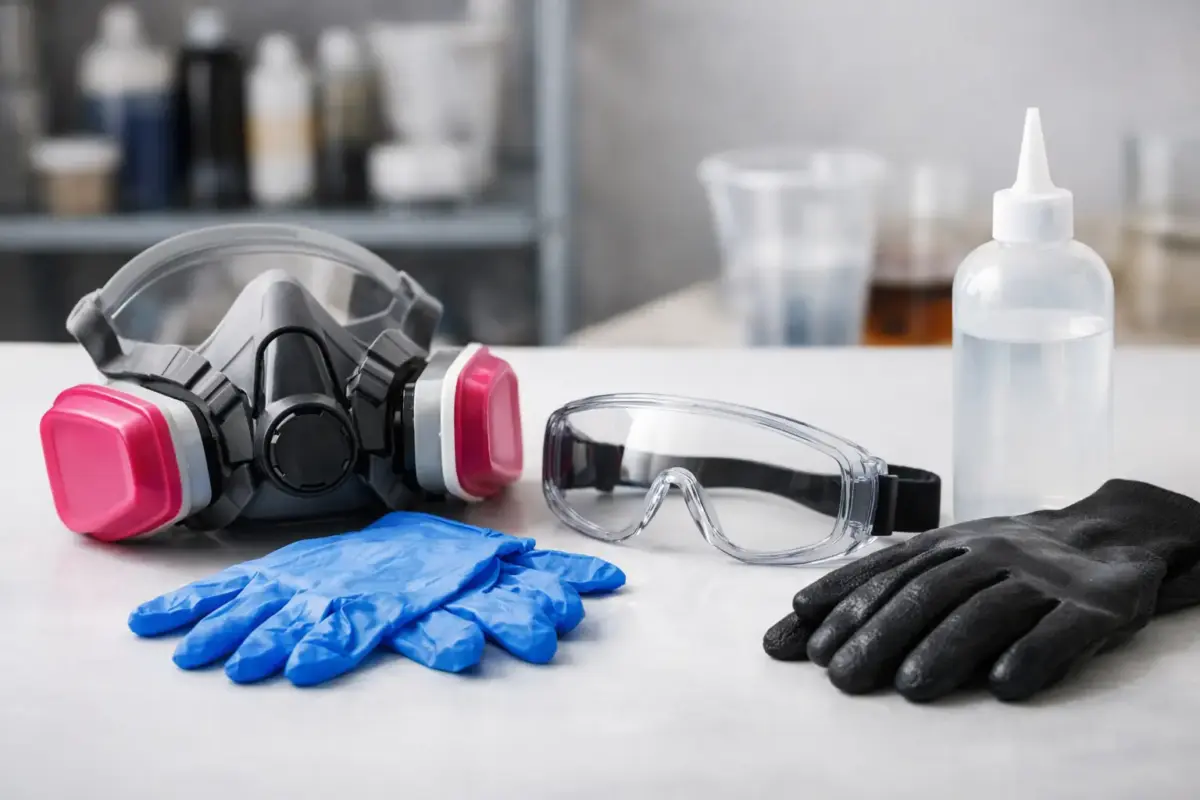
A sticky mixing cup, a forgotten pair of gloves, and a window cracked open a few centimetres – that is how a lot of resin projects begin. It also explains why resin safety equipment gets treated as an optional extra when it really belongs with your resin, moulds and mixing tools from the start.
If you make jewellery, coasters, trays, keyrings or small-batch products to sell, safe working habits do not need to be complicated. The aim is simple: protect your skin, eyes and breathing space while keeping your work area clean enough to make better pieces. Good safety gear supports your workflow. It is not there to make resin crafting feel intimidating.
Why resin safety equipment matters
Resin is creative, versatile and satisfying to work with, but it is still a chemical product. That means the way you handle it matters, especially before it has fully cured. Unmixed resin and hardener can irritate skin, and repeated contact is something worth avoiding. Splashes to the eyes are an obvious risk when pouring or stirring, and fumes can become more noticeable in smaller rooms or during longer sessions.
The exact level of protection you need depends on the type of resin you are using, the size of your workspace, and how often you craft. A beginner making a pair of earrings at the kitchen table will not have the same setup as a small business pouring multiple moulds several times a week. The principle is the same though: match your resin safety equipment to the way you actually work, not the way you hope to work one day.
The core resin safety equipment for most makers
For most home crafters, the essentials are straightforward. Gloves are top of the list because skin contact is the easiest mistake to make. Resin gets on mixing sticks, bottle caps, mould edges and tabletops quickly. A proper disposable glove gives you far more control than trying to work around the mess.
Eye protection is worth having nearby even if you do not wear it for every single step. If you are pouring slowly into open bezels, you may feel comfortable without goggles. If you are mixing larger volumes, decanting from bigger bottles or using tools that can flick resin unexpectedly, eye protection makes much more sense.
Respiratory protection is the area where people are often most unsure. Not every resin session feels strong-smelling, and that can lead to the idea that a mask is never needed. In reality, it depends on ventilation, product type and exposure time. If you work in a small indoor space, craft regularly, or notice irritation while mixing and pouring, a suitable respirator is a sensible step rather than an overreaction.
Protective clothing and bench covering also matter more than they get credit for. An apron, old long-sleeved top, or dedicated workshop layer keeps resin off everyday clothes and reduces the temptation to wipe hands on fabric when you are in the middle of a pour. A covered surface is easier to clean and helps stop cured drips becoming part of your furniture.
Gloves: your first line of defence
If you buy one category of resin safety equipment first, make it gloves. Resin crafting is hands-on by nature, and bare skin tends to get exposed during the least dramatic moments – removing bubbles, repositioning moulds, scraping cups and checking tacky edges.
Nitrile gloves are generally the better choice for resin work because they are resistant, practical and comfortable enough for detailed crafting. They also tend to fit closer to the hand than looser alternatives, which helps when you are placing embellishments or working with small moulds. Thin gloves can improve dexterity, but if they tear easily, they create a false sense of security. A slightly sturdier glove is often the better trade-off.
Change gloves as soon as they become contaminated inside, torn, or too messy to handle tools cleanly. Trying to stretch one pair through an entire project usually ends with resin on bottles, phone screens and door handles.
Respirators and masks: what is worth using?
This is where the phrase mask can cause confusion. A simple dust mask is not the same thing as a respirator designed for vapours. If you are working with resin and need breathing protection, use equipment suited to that purpose.
For occasional hobby use in a well-ventilated room, some makers may focus mainly on airflow and limiting exposure time. For frequent use, enclosed spaces, or anyone who is more sensitive to fumes, a respirator with the correct filters is a stronger option. Comfort matters here. If the fit is poor, you are less likely to wear it consistently, and that defeats the point.
If you also sand cured resin, remember that dust control is a separate issue. The gear that helps with vapours during pouring is not automatically enough for sanding dust. Your process may need different protection at different stages.
Eye protection and clothing
Safety glasses or goggles do not need to be bulky to be useful. They simply need to stop accidental splashes reaching your eyes while you pour, stir or clean tools. This becomes more important if you are handling larger bottles, using heat tools nearby, or moving quickly through batches.
Clothing is about barrier protection and cleanup. Long sleeves can help, but only if you are happy for them to be workshop clothes. Resin on knitwear is rarely a happy ending. Many makers prefer a simple apron over everyday clothes because it is easier to remove if a spill happens.
Your workspace matters as much as your gear
The best resin safety equipment cannot fully make up for a poor workspace. If you are crafting in a cramped corner with no real ventilation, gear helps, but setup still matters. Fresh airflow is one of the simplest improvements you can make. An open window, good room circulation and avoiding tiny enclosed spaces can make your sessions more comfortable.
Try to keep your resin station separate from food preparation areas if possible. That is not always easy in a home setting, but even a dedicated folding table, protective mat and storage box create a clearer boundary between crafting and everything else. It also helps you stay organised, which reduces spills and rushed decisions.
Lighting makes a difference too. When you can see clearly, you are less likely to overpour, knock containers or miss resin on your gloves. Safe working is often just well-organised working.
Choosing resin safety equipment for beginners
If you are just starting, it is easy to overbuy or underbuy. Some beginners pick up the cheapest gloves they can find and call it sorted. Others end up looking at professional workshop gear that is far beyond what they need for small craft projects.
A sensible beginner setup usually includes nitrile gloves, a covered work surface, eye protection, and a plan for ventilation. If you are going to work regularly indoors, add a suitable respirator early rather than waiting until you are uncomfortable. Starting with the basics does not mean cutting corners. It means buying the gear that matches your real first projects.
This is one of the reasons specialist suppliers are useful. Buying resin safety equipment alongside your resin, cups, stirrers and moulds makes the process simpler and reduces the chance of forgetting something important. It also feels more natural to treat safety gear as part of the project, not a separate category you will get round to later.
Common mistakes that make safety gear less effective
The most common mistake is having safety equipment but not using it consistently. Gloves left in a drawer are not much help once resin is already on your hands. The same goes for respirators that only come out for “bigger” projects, even though smaller regular sessions can add up over time.
Another issue is reusing disposable items past the point they are useful. Once gloves are torn or heavily contaminated, replace them. If your workspace covering is saturated with old spills, refresh it. Safety gear works best when it is clean, easy to reach and part of your setup before mixing begins.
There is also the temptation to focus only on pouring and forget the rest of the process. Cleanup, demoulding and sanding can all create their own mess and exposure points. Think in terms of the full workflow from opening bottles to finishing the piece.
Build safer habits, not just a shopping basket
The right resin safety equipment makes crafting more comfortable, but habits are what keep a workspace reliably safer. Put gloves on before opening bottles. Keep paper towel and bins close by. Do not eat while working. Wash hands after sessions, even if you think you stayed clean. Store products securely and keep them away from children and pets.
If you sell your work or craft often, these habits become even more valuable. They save time, reduce waste and help you work with more confidence. That matters just as much as the finish on the final piece.
A good resin setup should help you feel ready to create, not wary of starting. When your safety gear is practical, easy to use and suited to your space, you can spend less time second-guessing and more time making something beautiful.